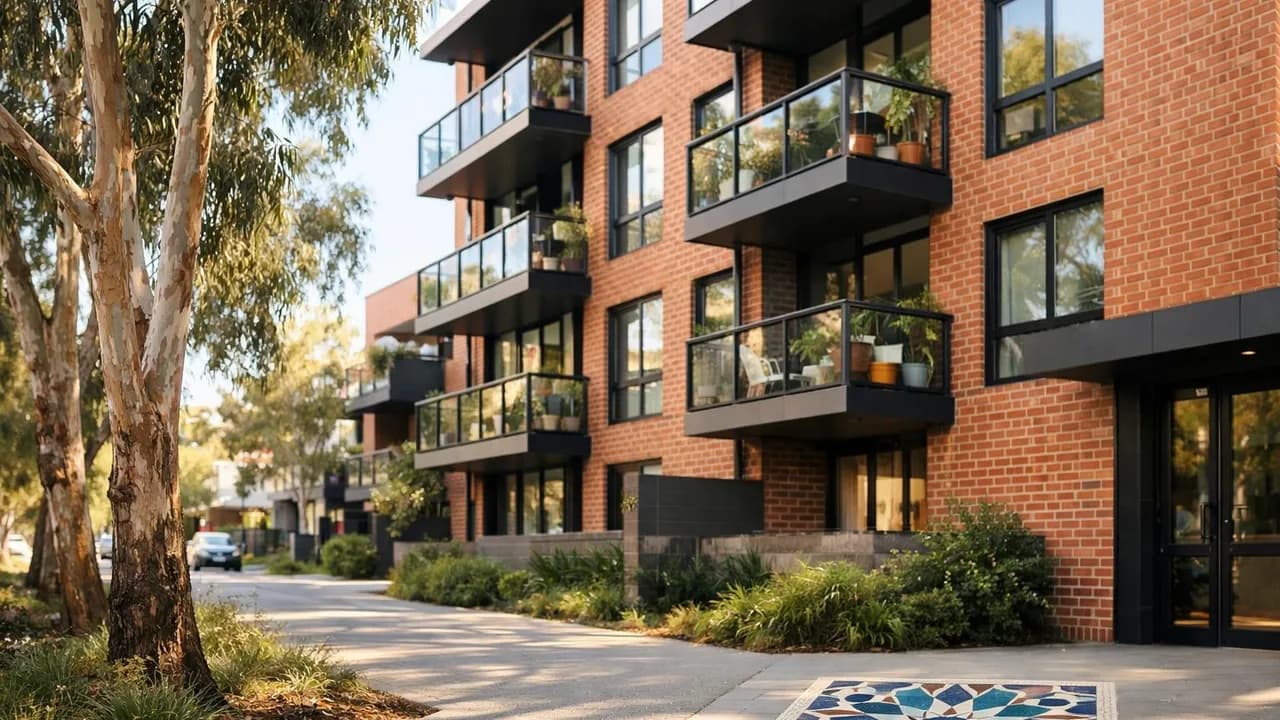
Every halal home finance journey in Australia starts with the same contradiction: you need to accumulate tens of thousands of dollars, and the default place Australians park that money - a high-interest savings account - is the exact instrument you are trying to avoid. This guide sets the deposit targets the providers actually publish, then works through the halal accumulation options that exist in this market, with their trade-offs stated plainly. Product terms verified August 5, 2026.
Ready to compare halal options?
First, know your number
Deposit requirements in the Australian halal market cluster in three tiers. The 5% tier: Hejaz Gold (finance to $2 million), Amanah, Ijarah Finance for established homes, and Baraqah's marketed entry point. The 10% tier: MCCA, with a condition worth planning around: the contribution must be sourced from at least three months of savings or equity in another property, so last-minute gifts need seasoning time. The 20% tier: Hejaz Essential and Flexible, and ICFAL. On a $700,000 purchase, that is $35,000, $70,000 or $140,000 before purchase costs and stamp duty. Add a buffer: MCCA's valuation and processing fees are non-refundable, ICFAL charges a $990 transaction fee, and your state's stamp duty sits on top.
Option one: a non-interest transaction account, and the discipline problem
The simplest halal option is holding your deposit in an everyday account that pays no interest. It is clean, liquid and riskless in nominal terms, and it costs you whatever return you decline, plus inflation. For a 12-month saving horizon that trade is often acceptable; over five years it stings. If you do receive interest in an ordinary account while saving, the standard scholarly guidance followed across the Islamic finance industry is to give it away to charity rather than keep it, but the cleaner practice is choosing an account structure that does not accrue it in the first place.
Option two: Hejaz's Deposit Builder
Hejaz runs a Deposit Builder program that invests savers' deposits in the Hejaz Income Fund, marketed with quarterly predictable returns, while they save toward a home. This is the only published product in our registry designed specifically for the halal deposit-saving problem, and it comes with the trade-off any honest adviser will name: it is an investment, not a deposit account. Fund returns are not guaranteed, units can fall in value, and money you need at a fixed settlement date is exactly the money most exposed to sequence risk. If you use an investment-based builder, keep your timeline flexible and understand the fund's redemption terms before you commit.
Option three: the ICFAL path, where the queue is the savings plan
ICFAL's home finance process has a feature that doubles as a deposit-saving mechanism: after conditional approval, applicants join a waiting list and are required to become members holding at least 10% of the estimated property price with ICFAL until funds become available, with a published waiting period of around six months. Your money sits in the co-operative's member fund, which is kept in an interest-free account, while you queue. For savers who want their deposit inside an Islamic structure and are already committed to ICFAL's Diminishing Musharakah (20% deposit, $700,000 cap), the queue converts waiting time into structure. The constraint is obvious: this only makes sense if ICFAL is your chosen provider.
Option four: investing the deposit, eyes open
Some savers with longer horizons put deposit money into Shariah-compliant managed funds or ETFs. The Australian market has real options there (Hejaz runs ASX-listed Islamic ETFs, and MCCA's Income Fund has published returns of 4.28% for FY25 against a 4.30% benchmark, with a $1,000 minimum). The rule of thumb worth writing down: money needed within about two years does not belong in growth assets. A deposit that falls 15% the month you find your house is a failed plan, however halal the vehicle. If you invest, step the money down toward cash-like holdings as your purchase window approaches, and check our investing pages for screened options.
What about super's First Home Super Saver angle?
Australia's First Home Super Saver scheme lets first home buyers release eligible voluntary super contributions toward a deposit. Whether this works halal depends entirely on where the contributions sit: inside a Shariah-compliant super option, the mechanism is just a tax wrapper around screened investments. Australia has Islamic super products (Hejaz and Salaam both operate in this space, with Salaam Super publishing three screened investment options). We have not verified scheme-specific mechanics with any Islamic super provider, so treat this as a lead to investigate with your fund and a tax adviser, not a recommendation: ask your Islamic super provider directly whether it supports FHSS releases and what the processing timeline is.
A worked plan
Suppose you target a $600,000 first home through Hejaz Gold at 5% down. You need $30,000 plus costs; call it $45,000 with stamp duty and fees, depending on your state and any first home buyer concessions. At $1,500 a month of saving, that is a 30-month runway. A reasonable halal structure: the first $20,000 accumulates in a non-interest account (your liquidity floor), the next tranche can sit in an income-style Islamic fund if your timeline has slack, and the final six months everything steps down to cash while you get written quotes from two providers. If instead you target MCCA's 10% tier, remember the three-month seasoning rule: the deposit must sit as savings for at least three months before application. The point of the plan is not sophistication; it is never being forced to sell an investment at a bad moment to hit a settlement date. Compare providers on the home financing hub when your number is in sight.
Frequently asked questions
How much deposit do I actually need?
Published floors: 5% at Hejaz Gold, Amanah, Ijarah Finance and Baraqah; 10% at MCCA (from at least three months of savings or equity); 20% at ICFAL and Hejaz's larger tiers. Budget separately for stamp duty, provider fees and a settlement buffer.
Is it haram to save my deposit in a normal savings account?
Earning interest is the problem, not the account itself. The widely followed practice is to avoid interest-accruing structures where possible and give away any incidental interest to charity. Non-interest transaction accounts, Islamic investment funds and provider programs like Hejaz's Deposit Builder are the disclosed alternatives in the Australian market.
Is the Hejaz Deposit Builder guaranteed?
No. It invests your savings in the Hejaz Income Fund, and fund returns are not guaranteed. It solves the religious problem of interest-based saving while introducing market risk. That trade can be sensible on a flexible timeline and dangerous on a fixed one.
Can gifted money count as my deposit?
Provider rules differ, and MCCA's published condition is the one to plan around: it requires the 10% contribution to come from at least three months of savings or property equity, which means gifts need to be seasoned in your account before application. Ask each provider on your shortlist how it treats gifted funds and how long they must sit.
Compare providers in your state
See side-by-side comparisons of Shariah-compliant products, or let our matcher recommend the best options for your situation.
Should I save a bigger deposit or buy sooner?
Run both columns honestly. A bigger deposit cuts the financed amount, can clear MCCA's LMI threshold at 80%, and opens the 20% tiers; the cost is more months of rent and market movement while you save. Our $800k worked example shows the arithmetic: on illustrative numbers, moving from a 5% to a 20% deposit saves several hundred dollars a month. There is no universal answer, only your rent, your savings rate and your market.