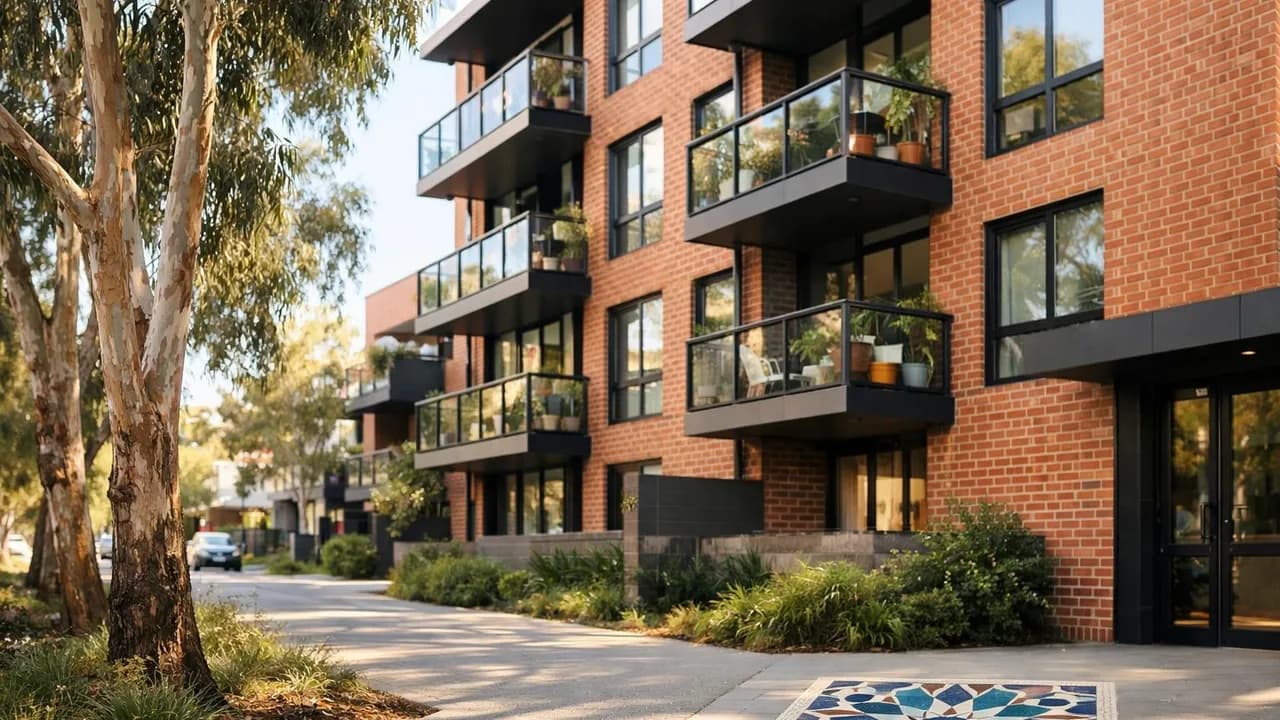
Property investment is Australia's favourite wealth strategy, and there is no Shariah objection to being a landlord; rental income from a permissible tenancy is among the cleanest earnings there are. The problem has always been the leverage, since conventional investment loans are interest-bearing by definition. The halal market now offers real alternatives, and this guide maps them: who finances investors, on what published terms, and the two Shariah wrinkles specific to investment property. Verified August 5, 2026.
Ready to compare halal options?
Who finances investment property
MCCA includes investment property in its standard residential scope: $50,000 to $2,000,000 at up to 90% of value, 10% seasoned deposit, no monthly fees or early-exit penalties, under the market's strongest named scholar panel. Amanah lists investment property alongside its 90% LVR owner-occupied lease-to-own, with its monthly audit governance intact. Hejaz does not carve out a separate investor product on its pages, but its tier architecture (Gold to $2,000,000 at 5% down, Flexible to $25,000,000) and published TMDs cover investment use; ask which tier and TMD applies to your scenario. Riyadh FS runs a dedicated Ijarah investment product (grow rental income on an investment property without riba) with a published entry of 5-10% contribution plus purchasing costs, fixed and variable rental options and no early-payment penalties on variable; its standing caveat applies, since no certifier is named anywhere on its site. Meezan Wealth brokers investment-property Ijarah with low-doc variants, though the stale 2.68% rate still displayed on its investment page at our crawl should be ignored entirely. Ijarah Finance and the broker tier (Halal Loans publishes 10-20% investment deposit bands) round out the field. For property inside superannuation, see our separate SMSF guide.
The two Shariah wrinkles for landlords
First, the tenant rule. Riyadh publishes guidance most providers leave implicit: avoid leasing to businesses engaged in prohibited activities (alcohol, gambling, pork-related trade). For residential property this rarely bites; for a shopfront or mixed-use purchase, your tenant's business becomes your Shariah question. Screen commercial tenancies the way you would screen a stock. Second, the income structure. Under an Ijarah investment product you collect market rent from your tenant while paying a rental facility fee to your financier; both flows are rent on real assets, which keeps the chain clean. Under ICFAL-style Musharakah co-ownership the rent itself would be shared, but note that ICFAL's published home finance targets owner-occupiers; its investment-side offerings run through membership investment products instead.
The tax layer, carefully
Negative gearing conversations dominate Australian property investment, and halal structures interact with tax differently than loans do: your deductible financing cost is rental or profit-share rather than interest, and providers publish little guidance. Meezan Wealth's SMSF material notes that the dividend portion of Musharakah payments is generally tax deductible under current ATO treatment, which suggests the analogous treatment investors hope for, but product-level tax outcomes depend on your contract's exact legal form. This is a genuine see-your-accountant zone: bring the actual contract set, not the marketing page, and price the after-tax position before committing. We do not offer tax advice, and any provider that hand-waves this question is doing you a disservice.
Picking terms for an investment purchase
Investor terms differ from owner-occupier deals in predictable ways, and the published parameters let you plan some of it. LVR ceilings: MCCA's 90% of value is the published maximum in the direct market, with Riyadh advertising 5-10% contribution entry; expect assessment to run tighter than the owner-occupier equivalent. Rate certainty: MCCA offers fixed windows of 1 to 5 years, Riyadh publishes fixed and variable rental options with no early-repayment penalties on variable, and Amanah's 1-10 year fixed terms are the longest published locks available to investors; a fixed window that matches your intended holding period removes the review risk from your yield spread. Documentation: low-doc paths exist at Meezan Wealth and Riyadh for self-employed investors, though Riyadh excludes low-doc from construction. And exits matter more for investors than anyone: penalty-free buyout at MCCA and cheap discharges elsewhere mean a sale or restructure never gets taxed by break fees, which is worth more than a few basis points of rate over a multi-property strategy.
Portfolio math without published rates
Investment property lives or dies on the spread between total rental yield and total financing cost, and this market publishes no financing rates, which makes disciplined quoting existential for investors. Practical method: get two written quotes for your specific scenario (investment use, your LVR, your doc type), each with the rate, review mechanism, all fees and the early-exit formula; model vacancy and maintenance conservatively, remembering that under most Ijarah structures you bear all ownership costs (Crestmount publishes this cost allocation plainly); and compare the after-tax cash flow at realistic rents, not advertised ones. If the deal only works at the most optimistic line of the spreadsheet, it does not work. Two published parameters help planning: MCCA's 90% ceiling gives maximum leverage headroom, and Riyadh's 5-10% published entry is the lowest advertised investor contribution in the market, with its certification caveat priced in. Run scenarios in the mortgage calculator and compare providers on the home financing hub.
Frequently asked questions
Is property investment halal?
Owning and renting out real property for permissible use is a well-established halal income source. The Shariah issues sit in the financing (solved by the structures above), the tenant's business (screen commercial tenancies) and, for some scholars, excessive leverage as a prudential rather than legal concern.
What deposit do I need for a halal investment property?
Published markers: Riyadh advertises 5-10% contribution plus costs, MCCA finances to 90% of value with its 10% seasoned-deposit rule, and Halal Loans publishes 10-20% investment deposit bands across its brokered panel. Expect investment criteria to run tighter than owner-occupier terms at assessment.
Can I negatively gear a halal investment property?
The economics can be similar (financing costs plus expenses exceeding rent), but the deductibility of rental or profit-share payments depends on your contract's legal form and current ATO treatment. Take the actual contract to an accountant before you rely on any tax outcome; providers publish almost nothing here.
Can I rent my investment property to any tenant?
Residential tenancies are rarely a problem. For commercial property, published provider guidance (Riyadh's, explicitly) says avoid tenants engaged in prohibited activities such as alcohol, gambling or pork-related business. Write the screening into your leasing criteria.
Can I buy investment property through my super fund halal?
Yes, through the SMSF products: MCCA finances residential investment property to $5,000,000 at 80% LVR and commercial to $10,000,000 at 75% (corporate trustees only), Hejaz runs Musharakah SMSF finance to $2,500,000, and several others compete. It is a different product set with its own compliance rules; our SMSF guide covers it fully.
Compare providers in your state
See side-by-side comparisons of Shariah-compliant products, or let our matcher recommend the best options for your situation.
Is commercial investment property financeable halal?
Yes, at scale: MCCA's commercial property finance reaches $50,000,000 at 75% LVR, funded through its Income Fund, and its SMSF commercial product runs to $10,000,000. Crestmount's SMSF Musharaka marketing spans commercial, industrial and retail property. Commercial deals add the tenant-screening obligation above, and pricing is quote-only as everywhere.